
The Lifelong Learner: Why This Board Member Codes at 2AM
6 July 2026
People often ask why, with a PhD already in hand and multiple board roles keeping me occupied, I would choose to take on another Master's degree. The honest answer is that none of us ever truly finish learning. In a field evolving as rapidly as precision medicine, structured study remains one of the few ways to stay rigorously current.
Connecting the Dots
Pursuing the MSc in Precision Health and Medicine (MScPHM) at the NUS Yong Loo Lin School of Medicine has been one of the most worthwhile decisions I've made in recent years. The curriculum connected the dots across genomics, computational biology, drug discovery, and clinical translation in a way that felt both demanding and refreshingly relevant.
While I have spent my career working across AI, healthcare informatics, and biochemistry, the real value today lies squarely at the intersection of these fields. I knew I could contribute more meaningfully in my board and advisory roles if I possessed a deeper, updated understanding of how these disciplines are converging. I needed a programme with significant breadth and depth and, crucially, enough hands-on practice to let me test the science for myself.
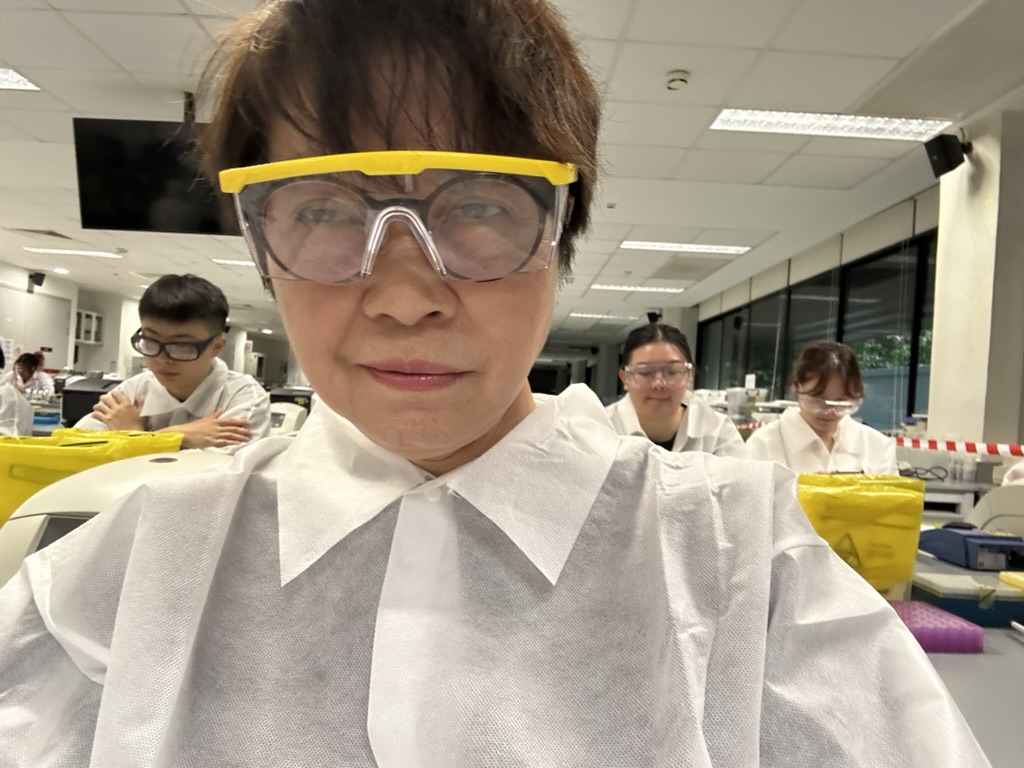
The Crucible of Practice
Why put myself through the rigour of developing AI models and analysing genomic data late into the night, balancing coursework with a hectic schedule of board papers and meetings? Because theory is no longer enough.
As I often say now, you don't really understand precision medicine until you've debugged it at 2 AM.
Those late-night practical exercises provided far more than just technical skills; they gave me a critical new literacy. Today, whether it is a novel biomarker panel, a drug discovery effort, or an AI diagnostic, I am equipped to look past the surface. The programme has given me the foundation to ask sharper, more incisive questions about the underlying science and, ultimately, whether it will actually work in the real world.
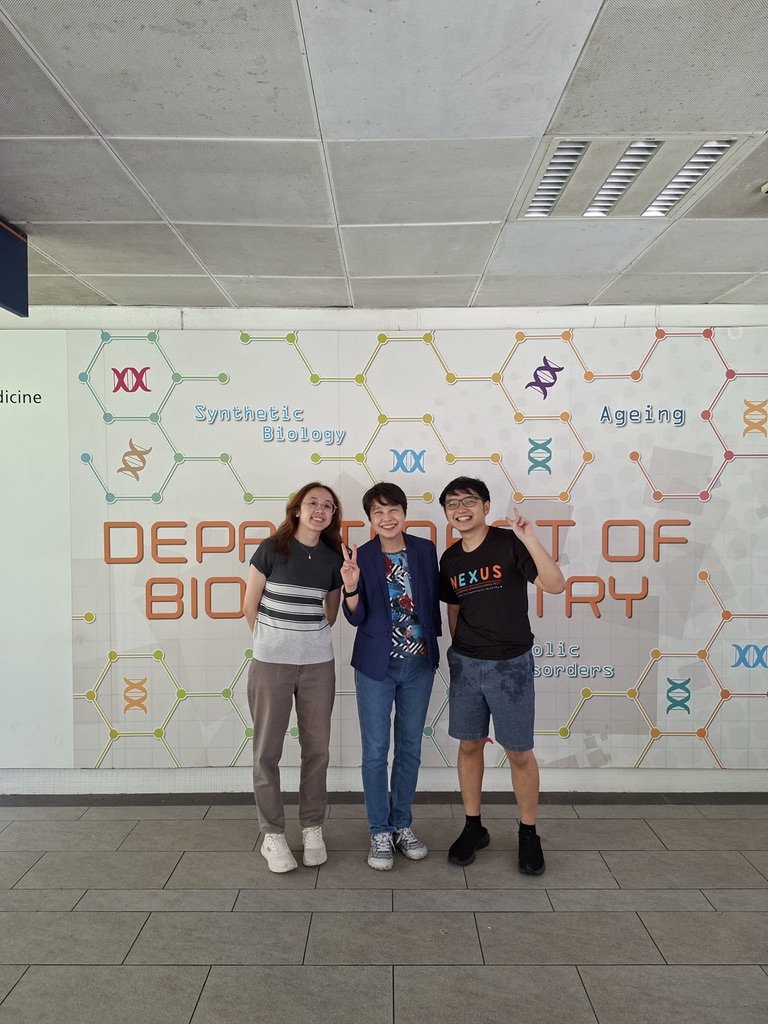
Leading with Technical Literacy
I'd recommend this excellent programme to three groups in particular.
Leaders of AI and science-based businesses: Because capital flows to those who understand the actual science, not just the pitch on the slide deck.
Policy makers: Because the frameworks and guardrails we write today will dictate the realities of medicine for the next decade.
Clinicians: Because the next generation of patient care will be fundamentally built on genomics, multi-omics, and AI. The clinicians who engage with these tools early will be the ones defining best practices, rather than scrambling to catch up to them.
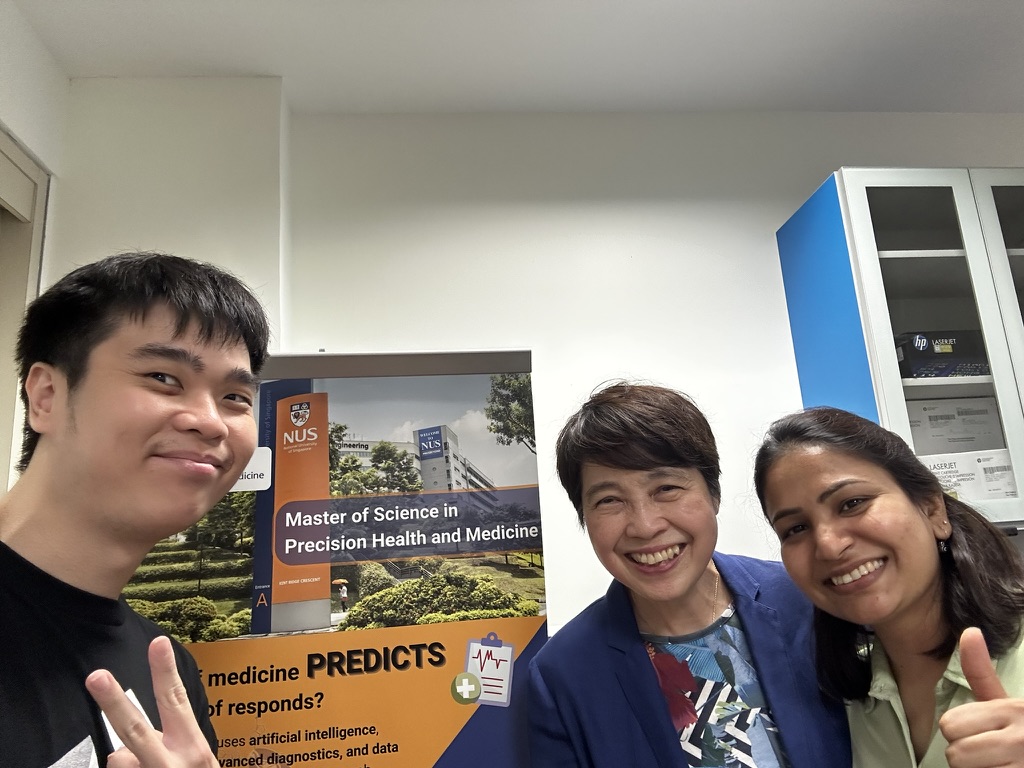
If I had to sum it up: upskilling is no longer optional — it's how you stay relevant, stay curious, and stay useful. The MScPHM gave me a platform to keep learning, and more importantly, to keep giving back with both wisdom and current knowledge.
About the student
Student: Dr Chong Yoke Sin
Programme: 2025 MScPHM
Dr Chong is one of Singapore's most influential technology leaders, having served as CEO of NCS and as founding CEO of IHiS (now Synapxe), where she helped build the nation's healthcare IT backbone. A past President of the Singapore Computer Society and current Chair of its AI Ethics and Governance Council, she is a leading voice on AI ethics, digital transformation, and cybersecurity across the healthcare and finance sectors. Her contributions have earned induction into both the Singapore Computer Society Hall of Fame (2023) and the global HIMSS Hall of Fame (2016), along with the Public Service Medal (PBM) for her work in the disability sector, a SkillsFuture Fellowship, and recognition as an NUS Distinguished Science Alumni (2024). She continues to serve at the highest levels of corporate and public governance, with board and advisory appointments spanning the Urban Redevelopment Authority, Wilmar International, Great Eastern Holdings, A*STAR, and the Singapore Management University.