
The Pharmacist Who Asked Why
6 July 2026
For years, Khee Fui did what a good pharmacist is trained to do: make sure the right drug reaches the right patient, safely and effectively. He believed in that work. But one question kept surfacing, one the clinical guidelines could not fully answer: why do two patients with the same diagnosis, on the same treatment, sometimes go on to fare so differently?
That question, and his unwillingness to let it go, is what led him to the MSc in Precision Health and Medicine (MScPHM).
A Question the Guidelines Couldn't Answer
Clinical guidelines are essential, but Khee Fui had begun to see their edge. Two people can share a diagnosis and still differ in everything that matters underneath it: the molecular mechanism of their disease, the way they respond to a drug, the risk that waits quietly years down the line. He became convinced the answers were hiding in data the field was only beginning to learn how to read — that large biomedical datasets and machine learning could see past the broad clinical labels to the subtypes, molecular patterns, and mechanisms that routine practice never makes visible.
Not Leaving Pharmacy, Going Deeper Into It
So he did not leave pharmacy. He followed it down to the molecule. For Khee Fui, the MScPHM was never a departure from his profession but a way to build on it — a programme sitting exactly where biomedical science, clinical relevance, and data-driven medicine meet. It let him keep hold of the mechanistic questions that had always pulled at him while putting new tools in his hands: multi-omics, computational analysis, and the machine learning methods now reshaping biomedical research.
Putting It to the Test: The Relapse That Comes Late
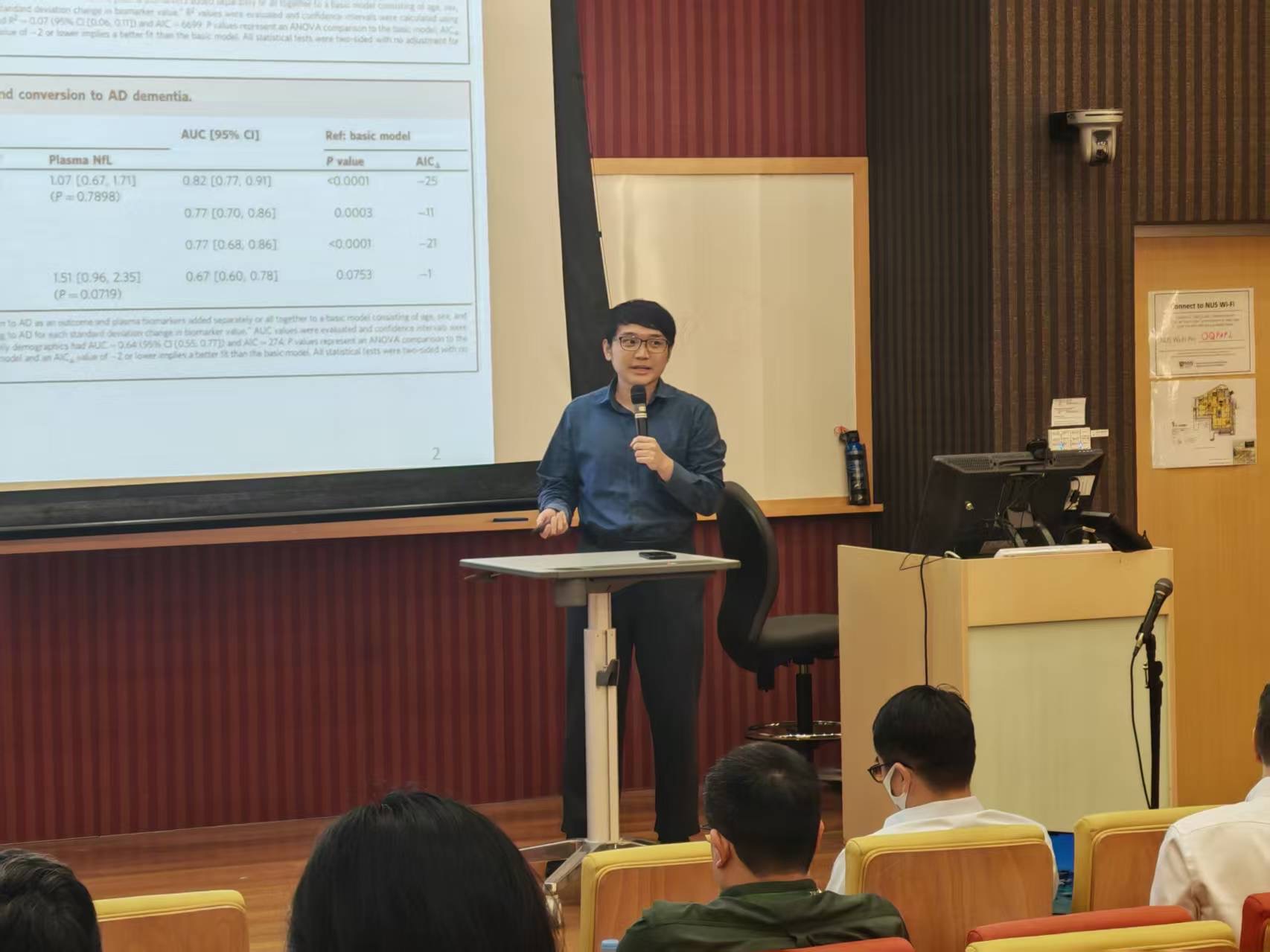
His convictions deepened in one of his MScPHM courses, PHM5010 Precision Biomarkers, where a research project led him to late relapse in estrogen receptor-positive breast cancer — a disease that can return long after a patient believes the danger has passed. Khee Fui built a machine learning approach that integrated clinical and transcriptomic data to find the features that mark out who is truly at risk over the long term.
And here is where his pharmacist's instincts proved his greatest asset. He refused to be impressed by a model simply because it performed well.
Where He Is Headed
Khee Fui now hopes to spend his career at the meeting point of healthcare, biomedical research, and artificial intelligence — doing the translational work that turns computation into something clinicians can use: disease risk prediction, biomarker discovery, pharmacogenomics, multi-omics. The pharmacist who once asked why one patient differs from another is now helping to build the tools that might one day answer him.
Advice to Future Students
His advice to those thinking of following him is honest about the cost.
About the student
Student: Mr Yong Khee Fui
Programme: 2025 MScPHM with Capstone
Khee Fui trained and practised as a pharmacist, where a persistent question — why patients with the same diagnosis and treatment can fare so differently — drew him toward the molecular mechanisms and data behind those differences. He joined the MScPHM programme at NUS Medicine to build on his pharmacy background rather than leave it, taking up multi-omics, computational analysis, and machine learning. In the PHM5010 Precision Biomarkers course he developed a machine learning approach integrating clinical and transcriptomic data to identify patients at risk of late relapse in estrogen receptor-positive breast cancer. He now hopes to work at the intersection of healthcare, biomedical research, and artificial intelligence, in areas such as disease risk prediction, biomarker discovery, and pharmacogenomics.